
Madrid in 5 days
Spending five full days in Madrid allows you to go beyond the essentials and experience the city with a comfortable, unhurried rhythm. This itinerary covers iconic museums, lively neighborhoods, historical landmarks, markets, parks, and enough flexible time to explore the city’s character more deeply. It balances culture, food, nightlife, and green spaces, giving you a rounded view of the Spanish capital without feeling rushed.
Across five days, you’ll move through elegant boulevards, creative districts, and classic monuments, while also discovering corner cafés, independent shops, and local hangouts. The plan is designed for first-time visitors who want a complete yet manageable route, but it also works well if you’ve visited before and want a richer, neighbourhood-focused approach.
Are you ready to discover
the essentials of Madrid in 5 Days?
5-Day Madrid Itinerary
Day 1
—
Historic Centre, Royal Palace & Surroundings
Begin your Madrid visit in the city’s historic core and move at a measured, walkable pace that highlights civic architecture and social life. Start at Puerta del Sol, the symbolic centre of Spain, and follow the short pedestrian streets to Plaza Mayor, where the arcaded square frames centuries of public life; arrive before mid-morning to avoid tour groups and capture cleaner photos.
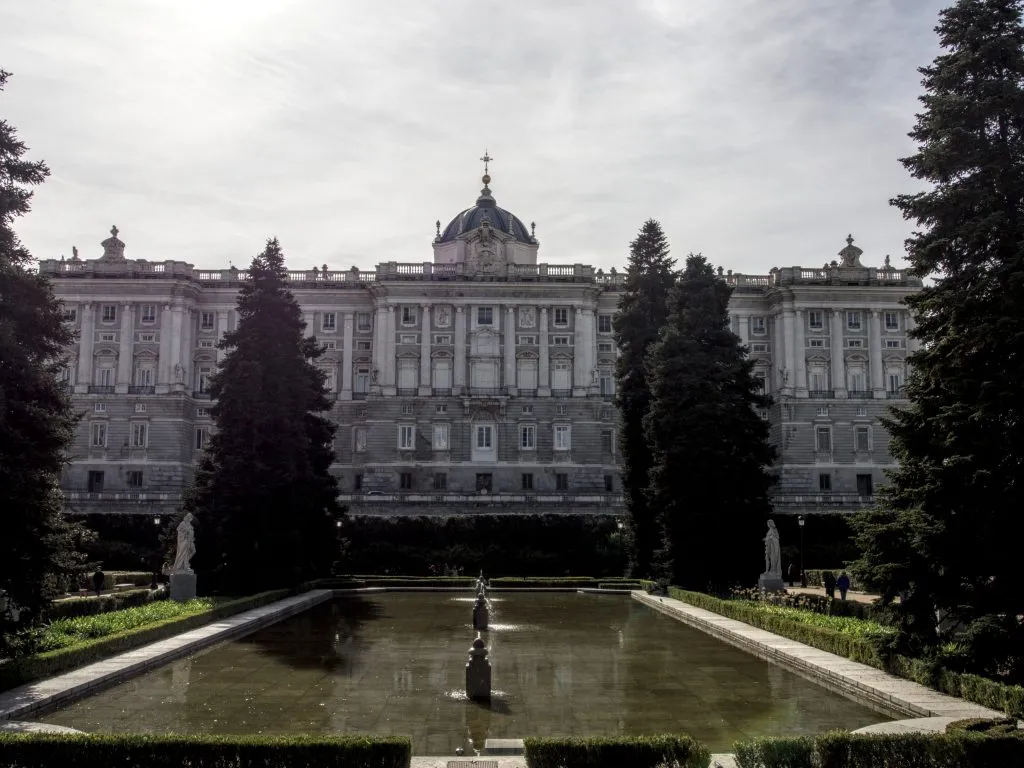
From Plaza Mayor, thread through the Austrias quarter toward the Royal Palace and Almudena Cathedral—if you plan to enter the palace, book a mid-afternoon timed slot to avoid early crowds and combine the interior visit with a walk through the Sabatini Gardens.
After the palace, descend into La Latina, a neighbourhood that rewards slow wandering.
Explore Cava Baja and side streets for traditional taverns and modern tapas bars; consider a guided food tour if you want curated tastings and local context. If you are there on a Sunday, allocate at least 60–90 minutes to El Rastro market—team up market browsing with a nearby café break to regroup.

Day 2
—
Prado Museum, Retiro & Barrio de las Letras
Make Day 2 your art-focused morning and literary-flavored afternoon. Start early at the Prado Museum—use a skip-the-line ticket and a focused highlights route (Velázquez, Goya, Bosch) to keep the visit to roughly two to three hours. After the Prado, cross directly into Retiro Park: visit the Crystal Palace and the lake; if weather permits, a short rowboat rental makes a relaxing midday interlude and creates memorable photo opportunities. For lunch, choose cafés along Paseo del Prado or the adjacent Jerónimos neighborhood to stay efficient.
In the afternoon, move into the Barrio de las Letras where literary plaques and house-museums (Lope de Vega, Cervantes references) give cultural depth; this is also a great area for afternoon coffee and pastry breaks. If contemporary art interests you, detour to Lavapiés or La Casa Encendida for rotating shows and more experimental programming. End the day with an evening paseo and a dining choice that echoes the museum tone—refined tapas near Huertas or a relaxed vermouth in a local tavern.

Day 3 — Reina Sofía, Atocha & Thyssen
Dedicate Day 3 to the modern and the connective tissue between Madrid’s major collections. Begin at the Reina Sofía Museum—reserve 90–120 minutes for the permanent collection and major temporary exhibitions (don’t miss Guernica if it’s on display). From Reina Sofía, take a short stroll to Atocha Station to glimpse the indoor tropical garden—this calm, plant-filled concourse is an unexpected city highlight and useful for photos or a quick climate-controlled break.
After Atocha, proceed to the Thyssen-Bornemisza, where the chronological breadth lets you see transitions from early European portraiture through Impressionism. Time your Thyssen visit for late morning to avoid heavy afternoon crowds. For lunch, choose Mercado de San Miguel or a nearby café—if you prefer a local market experience, consider San Antón’s food stalls for varied tasting options. In the late afternoon, use the riverside Madrid Río or the Matadero cultural complex for a chilled creative scene and sunset views.

Day 4 — Chueca, Malasaña & Rooftop Views
Use Day 4 to absorb Madrid’s contemporary urban energy and nightlife-ready neighbourhoods. Start in Chueca, where boutiques, LGBTQ+ friendly cafés and modern gastronomy set a lively tone; the nearby San Antón Market is ideal for a tasting breakfast or mid-morning coffee. Then wander toward Malasaña, a creative district of vintage stores, street art and intimate galleries—time about 90–120 minutes to browse and photograph murals, stopping at Plaza del Dos de Mayo for people-watching.
In the afternoon, reconnect with central Madrid by heading to Gran Vía for architecture and shopping, and plan a rooftop visit near sunset. Rooftops like Círculo de Bellas Artes or Riu Plaza España provide panoramic views perfect for golden-hour photography and for encouraging conversions to rooftop reservations. In the evening, choose a craft-beer bar in Malasaña or a late tapas crawl in Chueca; both neighbourhoods remain lively until late.

Day 5 — Day Trips or Casa de Campo
Day 5 is your opportunity for regional contrast or deeper local relaxation. If you choose an excursion, Toledo offers a compact medieval world—cathedral, synagogue-museum visits and artisan workshops—while Segovia delivers dramatic Roman monuments and an iconic Alcázar; book trains or guided tours in advance and allocate a full day to appreciate either destination’s pacing.
If you prefer a lighter, in-city final day, head to Casa de Campo for open-air activities: rent a bike, take the cable car for city panoramas, or picnic by the lake. Combine it with an afternoon at Matadero or La Casa Encendida for cultural programming and contemporary shows. Conclude with a final evening focused on memory-making: a flamenco tablao, a sunset rooftop, or a curated tasting menu—prioritise reservations for higher-end options.

Alternatives and Thematic Routes
If you prefer to adapt the itinerary to a specific interest, the following alternatives turn any standard day into a coherent thematic experience.
Contemporary art — Conde Duque, La Neomudéjar, CentroCentro
Dedicate a morning or afternoon to Madrid’s contemporary scene to balance the city’s classic museums. Conde Duque hosts rotating exhibitions, performance programs and cultural events; checking the schedule in advance is useful, especially if workshops or concerts require booking. La Neomudéjar, set in a former industrial railway complex, is a key spot for experimental art and multimedia practices, and its compact scale makes it easy to explore in 45–90 minutes. CentroCentro, inside the Palacio de Cibeles, blends art, photography and curatorial projects, plus a rooftop with excellent city views.
Food-focused day — San Miguel, San Ildefonso, San Antón, Chamberí gastro-taverns
Turn one day into a curated food route. Start at Mercado de San Miguel for pintxos and gourmet products; continue to Mercado de San Ildefonso for independent food stalls; move on to Chueca’s Mercado de San Antón for a polished, modern touch; and finish in Chamberí, where traditional taverns coexist with creative gastro-bars. Add a hands-on element such as a cooking class or a market-to-table workshop to deepen the experience.
Extra green spaces — Casa de Campo, Madrid Río, Royal Botanical Garden
For a softer, greener rhythm, integrate spacious outdoor areas. Casa de Campo offers cycling routes, a lake, a cable car and sweeping viewpoints; Madrid Río is ideal for riverfront walks, bike paths and playgrounds; and the Royal Botanical Garden provides a calm setting for seasonal plant displays and photography. Visit early or late in the day for better light and cooler temperatures in summer.
Architecture lovers — Cuatro Torres, AZCA, Castellana developments
Shift the focus to modern architecture and urban design. The Cuatro Torres Business Area offers striking skyscrapers and viewpoints; AZCA showcases Madrid’s corporate architecture from the 1970s–1990s; and the newer developments along Paseo de la Castellana illustrate the city’s ongoing transformation. Consider pairing this with a guided architectural walk or an audio tour for context.
Nightlife — Chueca, Malasaña, Huertas
End the day exploring nightlife by neighbourhood: Chueca for cosmopolitan cocktail bars, Malasaña for alternative culture and live-music spots, and Huertas for terrace hopping and intimate tablaos. Make reservations for popular venues and avoid overly touristy clusters for a better experience. Add brief guidance on opening hours, safety and late-night transport to keep the advice practical.
Practical tips
Transport & walking
Central Madrid is compact and mostly walkable; expect short Metro hops between distant neighbourhoods (e.g., Retiro ↔ Malasaña). Use contactless payment or a short multi-day Metro pass for convenience.
Average daily walking can range from 5–10 km depending on your route—comfortable shoes are essential.
Timing & tickets
Buy timed tickets online for the Prado and Royal Palace during high season; check temporary exhibition dates for the Thyssen and Reina Sofía. Arrive at popular museums early to avoid crowds, or book late-afternoon slots when available. For flamenco shows and guided day trips, pre-book to secure preferred times.
Money & expenses
Most places accept cards, but carry some euros for small stalls and tapas bars. Expect mid-range meal prices in Madrid city centre; budget travellers can rely on markets and casual tapas for good value.
Accessibility & family tips
Many museums offer step-free access and reduced-entry options; check specific entrance details. Families should plan shorter museum sessions and more park/playground time; many attractions offer family tickets. (Affiliate ideas: family attraction tickets.)
Weather & packing
Summers can be very hot—pack light clothing, sunscreen and a refillable water bottle. In spring and autumn bring layers and a compact umbrella. Evenings can be cooler, so a light jacket helps.

FAQ
Is 5 days enough to see Madrid well?
Yes. Five days allow you to cover highlights, museums, parks, and neighbourhoods at a comfortable pace.
Which museum is the most important?
The Prado is generally considered the essential stop, especially for classical painting.
Is Madrid walkable?
Yes. Most areas in the centre can be explored on foot, though the metro is efficient for longer distances.
Should I book tickets in advance?
For the Royal Palace, Prado, and Reina Sofía, booking ahead helps avoid lines.
Are day trips worth it?
Yes, especially Toledo or Segovia. They fit naturally into a 5-day plan.
Where should I stay?
For convenience, areas around Gran Vía, Sol, Retiro, or Las Letras work well.